If you've been managing advert display campaigns for a few years, you already know that the gap between passable results and genuinely high-performing deployments keeps widening. The online advert display market reached USD 242.36 billion in 2026, growing at a 14.26% CAGR, and the pressure to justify every screen and every budget line is more demanding than ever.
What distinguishes operators who consistently get results from those who simply rotate content comes down to a cluster of techniques that most introductory guides still overlook. The most impactful improvements tend to cluster around hardware-level decisions, programmatic content integration, and measurement frameworks that go beyond impression counts. This guide covers the advanced advert display techniques that are making a measurable difference in 2026.

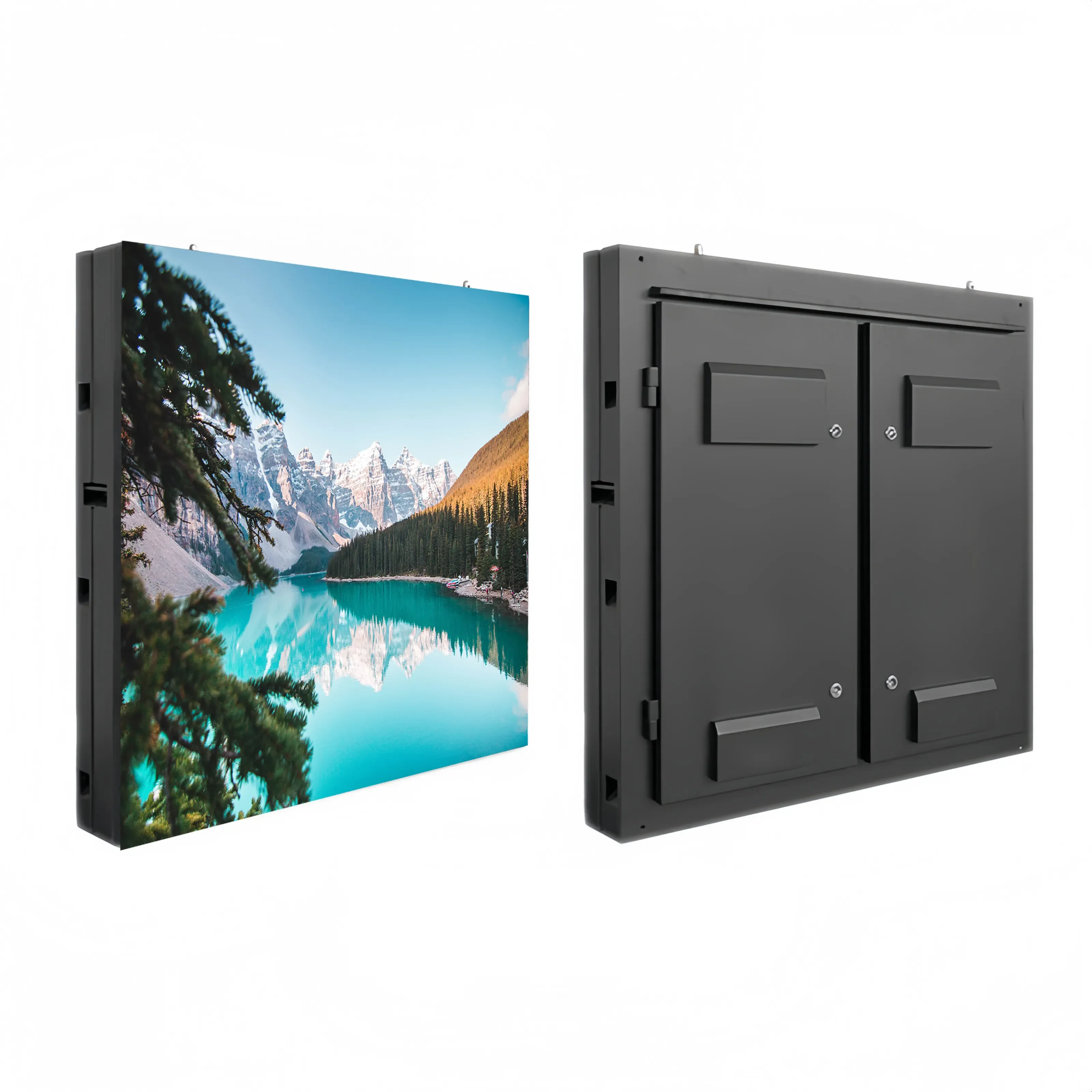
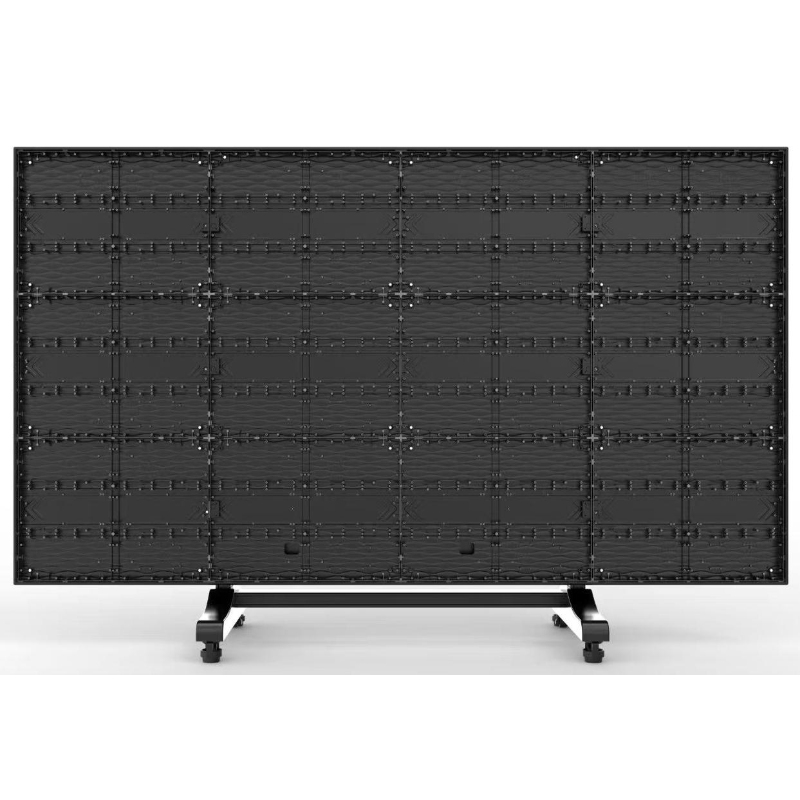
Treating the advert display screen as a neutral medium is one of the most common mistakes operators make. It isn't neutral. The physical characteristics of your advert display — pixel pitch, peak brightness, refresh rate, and protection rating — directly determine whether your content performs or simply occupies space in its environment.
A reliable rule of thumb is to divide the minimum intended viewing distance (in meters) by 1,000 to estimate an appropriate pixel pitch in millimeters. An advert display placed 10 meters from viewers typically performs optimally at 10mm pitch or finer. Going coarser than that is among the most frequent underspecification mistakes in outdoor advert display procurement.
Outdoor advert display environments in direct sunlight typically require 5,000–10,000 nits. That said, high brightness alone does not guarantee visual quality. Color uniformity and contrast ratio matter as much as peak luminance. A calibrated 6,000-nit display will often outperform an uncalibrated 10,000-nit unit — a distinction worth raising in any supplier conversation.
For indoor retail and transportation environments, COB (Chip-on-Board) LED panels offer superior pixel uniformity and higher resistance to physical contact, which reduces maintenance frequency over longer advert display campaign deployments.
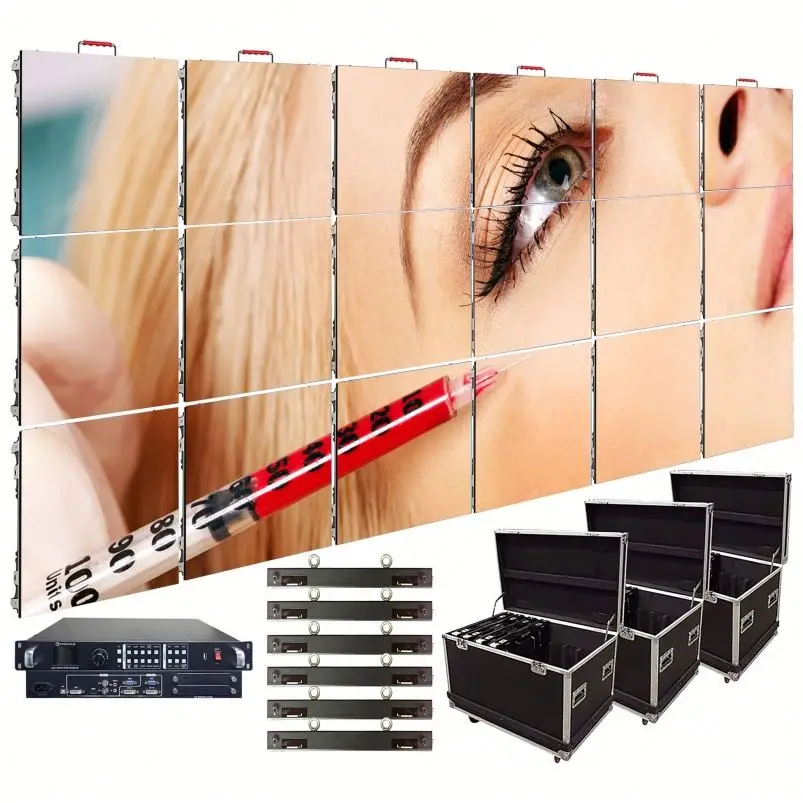
Image: Outdoor advert display LED panel wall installation for programmatic advertising
Outdoor LED advert display installations are increasingly integrated with programmatic pDOOH platforms for real-time content delivery.
As of 2026, approximately 91.5% of digital advert display inventory is purchased programmatically. What that statistic understates is the growing convergence between programmatic digital-out-of-home (pDOOH) platforms and the physical LED infrastructure serving those ads.
Operators who have made this transition consistently report two gains: faster content refresh cycles and more granular audience targeting by time-of-day and real-time footfall signals. If you're still scheduling advert display campaigns through static playlists with weekly updates, the gap between your targeting precision and current market capabilities is substantial.
Confirming that your advert display controller supports third-party API feeds and dynamic content triggers.
Selecting a pDOOH supply-side platform (SSP) capable of ingesting real-time inventory data from your screen network.
Establishing content delivery SLAs, particularly for high-brightness outdoor advert display environments where rendering delays become visible to audiences.
LED technology accounts for 47% of the digital signage hardware market, partly because energy costs have become a meaningful line item in long-running advert display deployments. Energy-saving LED advert display solutions based on low-power driver IC architectures can reduce operational power consumption by up to 31% compared to standard configurations, with no visible reduction in output quality under normal viewing conditions.
This matters beyond utility cost. Outdoor advert display concession agreements in several European and Middle Eastern markets increasingly include energy consumption disclosure requirements. Meeting lower consumption thresholds proactively avoids renegotiation mid-contract. Operators serving municipal or transit clients should factor this into advert display hardware specifications during procurement rather than treating it as a later upgrade decision.
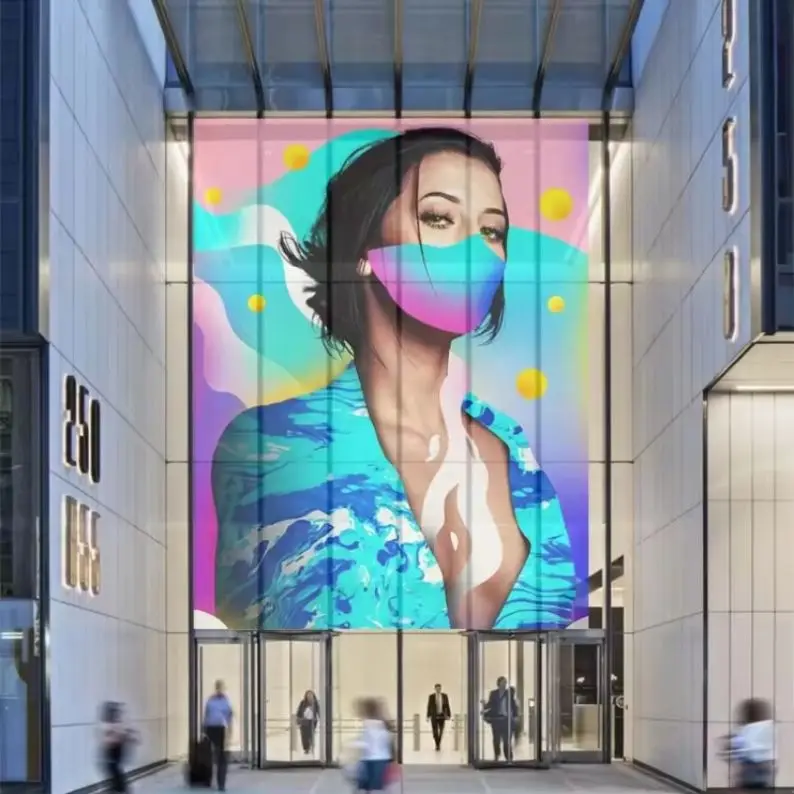
Image: Energy-efficient LED signage display advertising campaign in retail environment
Energy-saving LED advert display screens reduce operational power consumption while maintaining campaign visibility in high-traffic retail environments.
The creative brief for an advert display campaign needs to account for how audiences actually encounter the screen, not just how the mockup renders on a laptop. Outdoor digital advert display signage captures 400% more attention from passersby than static displays, but that advantage only holds when content is structured to be legible within the available dwell window.
Place the core product claim or call to action within the first 2–3 seconds of each advert display rotation cycle.
Limit body text to a maximum of 7 words per frame for displays viewed at over 15 meters.
Prioritize high-contrast pairings over bright colors alone. This matters for mixed-lighting environments where ambient conditions shift throughout the day.
For multi-product advert display campaigns, limit rotation to three product slots per display cycle. Audience attention drops sharply after the third item in a sequence.
Footfall data tells you how many people passed a screen. What it doesn't reveal is whether those people matched your target buyer profile, how their movement patterns changed after encountering the advert display, or which content variants drove downstream inquiry or purchase activity.
By 2026, the more capable operators have moved to layering additional data sources: mobile device proximity signals, point-of-sale data from nearby retail locations, and weather-triggered content rules. Building a more complete picture of advert display campaign impact requires cooperation between the display operator, the content advertiser, and in some cases the venue. The ROI clarity it creates tends to justify the setup cost within the first full campaign cycle.
Advert display campaigns that report only reach and impression metrics are harder to defend in B2B procurement conversations. The more defensible measurement approach in 2026 is incremental lift: comparing sales volume, branded search traffic, or qualified inquiry rates between audiences exposed to the campaign and matched control groups over a defined period.
Measured this way, digital signage advert display implementations show an average 32% sales increase for retail advertisers. That figure only holds, though, when the methodology isolates the display channel from concurrent campaigns running on other media simultaneously.
For operators managing multi-screen advert display networks, establishing clean baseline periods before campaign launches and maintaining identifiable control zones within the network makes channel attribution significantly more accurate and defensible to advertisers.
These techniques don't work well in isolation. The most effective advert display deployments in 2026 combine hardware correctly specified for its physical environment, programmatic content delivery that applies location and audience data intelligently, and measurement frameworks that connect screen exposure to downstream business outcomes.
When evaluating advert display hardware for a new deployment — whether for indoor retail, outdoor roadside, or transit environments — the energy profile, pixel uniformity, and controller compatibility of your chosen displays will determine how accessible many of these techniques are. Getting those decisions right at the procurement stage costs considerably less than retrofitting them mid-campaign.
Display advertising as a channel is growing at 15.5% CAGR through 2030. The advert display operators building the infrastructure and measurement foundations now will be substantially better positioned to capture that growth than those still optimizing last year's playbook.
 Hot News
2025-05-27
2025-09-25
2025-09-23
 EN