 EN
EN

When businesses look for impactful digital signage, the choice between an LED poster and an LCD poster often becomes a central decision. Both formats deliver visual content in a sleek, freestanding form, yet they differ significantly in technology, performance, and long-term value. Understanding those differences is essential before committing to either solution for your retail space, exhibition booth, or commercial environment.
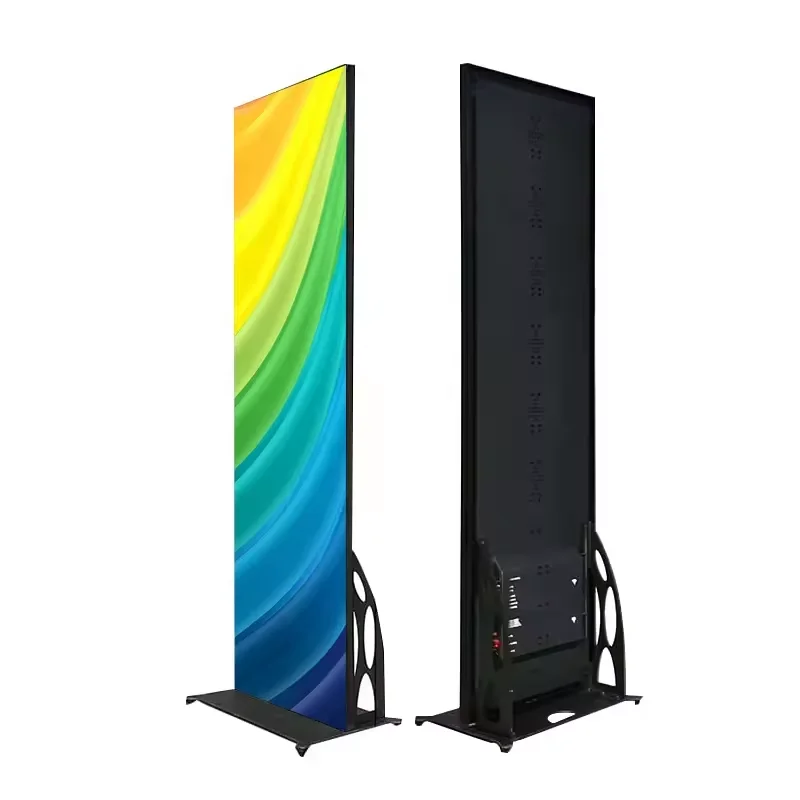
This comparison focuses on helping you make a confident, informed decision. An LED poster and an LCD poster may look similar at first glance, but once you evaluate brightness, durability, installation flexibility, and total cost of ownership, the distinction becomes very clear. This guide walks through the critical factors so you can select the right LED poster or LCD poster for your specific use case.
Core Technology Behind Each Display Type
How an LED Poster Works
An LED poster uses a direct-view LED panel as its display surface. Each pixel in an LED poster is formed by a cluster of red, green, and blue LED chips that emit light independently. This means an LED poster generates its own illumination rather than relying on a backlight. The result is a brighter, more vivid LED poster image with superior contrast even in well-lit environments. A high-quality LED poster typically achieves brightness levels between 800 and 2000 nits, making it suitable for bright retail floors, showrooms, and exhibition halls.
Because an LED poster has no liquid crystal layer or glass substrate in the traditional sense, it is also more resistant to physical stress. The LED poster panel can be manufactured at various pixel pitches, with P2 being a popular choice for indoor LED poster applications. A P2 LED poster delivers sharp, detailed visuals from close viewing distances, which is exactly what retail and hospitality environments demand.
How an LCD Poster Works
An LCD poster uses a liquid crystal display panel with an LED backlight layer positioned behind the screen. The backlight in an LCD poster shines through liquid crystals and color filters to produce the image. While modern LCD poster screens have improved significantly, they still have limitations around contrast ratio and brightness uniformity compared to a direct-view LED poster. The glass panel in an LCD poster is also more fragile and heavier for its size, which can complicate installation in high-traffic areas.
Brightness, Visual Quality, and Environment Fit
Brightness Advantage of an LED Poster
One of the clearest advantages of an LED poster over an LCD poster is brightness. An LED poster can produce much higher nit values, ensuring that content remains vivid and readable even under strong ambient lighting. In a busy supermarket, an LED poster retains full visual impact near bright ceiling lights, whereas an LCD poster often appears washed out in the same setting. If your display location has significant ambient light, an LED poster is the practical choice.
The color accuracy of an LED poster is also noteworthy. A well-calibrated LED poster achieves a wide color gamut, making product images, brand graphics, and promotional videos look true to life. For fashion retailers, food and beverage brands, or luxury goods displays, the visual fidelity of an LED poster directly supports brand perception. The LCD poster performs adequately in controlled lighting conditions but cannot match the color depth that a premium LED poster offers in challenging environments.
Viewing Angle and Display Consistency
An LED poster delivers a consistent image across wide viewing angles without the color shift that can affect some LCD poster panels. When customers approach an LED poster from different directions, the content remains clear and properly saturated. This is especially valuable in open retail or exhibition spaces where visitors move freely. An LCD poster may show slight brightness drop-off or color inaccuracy at extreme angles, which can undermine the display's effectiveness in a dynamic environment.
Installation, Flexibility, and Long-Term Value
Portability and Setup of an LED Poster
A freestanding LED poster is designed for portability. Many LED poster models include a rolling base or carry case, allowing teams to reposition the LED poster between events, trade shows, or store locations without professional installation support. This flexibility makes an LED poster a strong fit for businesses that need mobile digital signage. An LCD poster can also be freestanding, but the heavier glass construction and backlight housing make frequent relocation less convenient.
Content management on an LED poster is typically straightforward. Most LED poster units support USB, Wi-Fi, or network-based content updates, making it simple to refresh promotions or campaigns. Updating an LED poster remotely saves time and ensures your messaging stays current. An LCD poster generally offers similar connectivity, so content management is not a major differentiating factor between the two formats.
Lifespan, Maintenance, and Cost Considerations
An LED poster typically offers a longer operational lifespan than an LCD poster. Direct-view LED technology in an LED poster can sustain performance for 50,000 hours or more before significant brightness degradation. An LCD poster may experience backlight dimming earlier, depending on usage intensity. Over time, the lower maintenance requirements of an LED poster can offset its higher upfront investment compared to an LCD poster.
The initial cost of an LED poster is generally higher than that of an LCD poster of similar size. However, when you factor in replacement cycles, energy efficiency, and visual performance, an LED poster frequently delivers better return on investment for commercial applications. Businesses that rely on digital signage daily will find that the LED poster justifies its cost through durability and sustained visual quality. For lower-frequency or short-term applications, an LCD poster may be a sufficient and more budget-friendly option.
FAQ
Is an LED poster suitable for outdoor use?
Most standard LED poster models are designed for indoor environments. An indoor LED poster typically achieves brightness levels suited for interior settings. If you need outdoor digital signage, look for an LED poster specifically rated for outdoor use with weatherproofing and higher nit output. Always verify the IP rating and brightness specification before deploying an LED poster outdoors.
What pixel pitch should I choose for an indoor LED poster?
For most indoor retail or exhibition applications, a P2 or P2.5 LED poster provides excellent image clarity at typical viewing distances of one to four meters. A P2 LED poster is ideal when viewers will be standing close to the screen, such as at a reception desk or product display area. For larger spaces with longer viewing distances, a slightly higher pixel pitch LED poster remains cost-effective without sacrificing perceived sharpness.
Can an LED poster display video content?
Yes, a modern LED poster is fully capable of playing high-definition video content, including promotional clips, animated graphics, and looping brand videos. Most LED poster units support common video formats and include built-in media players. The high refresh rate of a quality LED poster ensures that motion content appears smooth and free of flicker, which is important for both viewer comfort and professional presentation.