Digital Out-of-Home (DOOH) advertising thrives on cutting through noise—and 3D billboards do so by aligning with how human vision and urban environments actually work. Their dominance isn’t just aesthetic; it’s rooted in neuroscientific responsiveness and contextual intelligence.
Human brains process depth perception instinctively, triggering heightened engagement with 3D visuals. This biological response extends average gaze duration to 3.2 times longer than 2D equivalents—a finding validated across multiple neuromarketing studies, including research published in the Journal of Consumer Psychology. Depth cues like parallax and shadow simulation activate spatial processing regions in the visual cortex, creating stronger, more durable brand impressions. The result is not just longer attention—it’s measurably higher recall, with 3D campaigns showing up to 41% greater unaided brand recognition after single exposure.
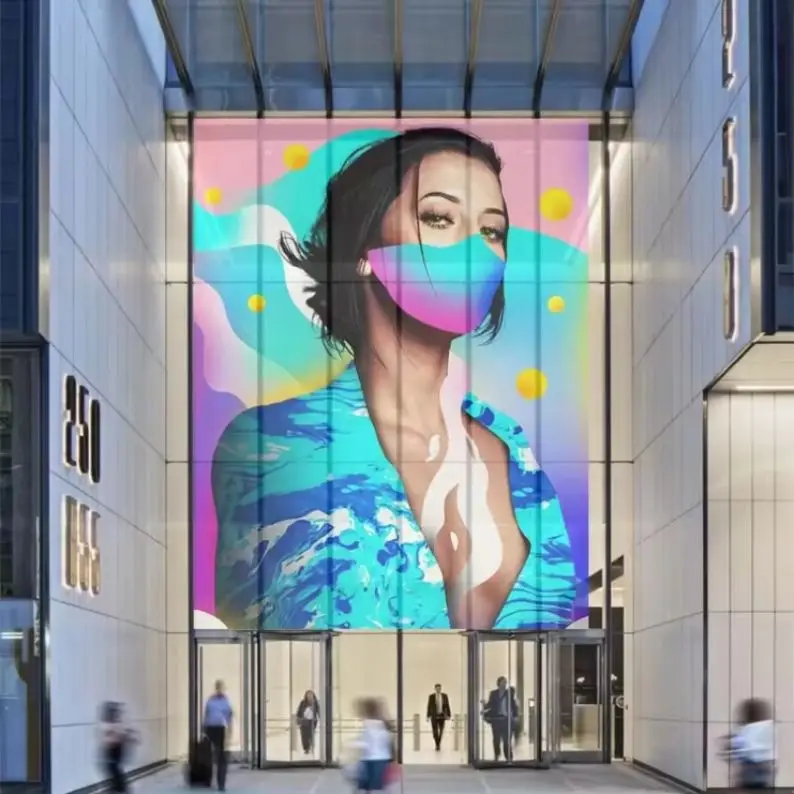
In dense cityscapes where flat ads compete for diminishing cognitive real estate, 3D installations break through by projecting beyond the frame. Rather than fighting architectural surroundings, they integrate with them—leveraging building facades, street-level sightlines, and ambient light to create dimensional focal points. This contextual disruption transforms passive viewing into experiential engagement, directly countering ad fatigue. As noted by the Outdoor Advertising Association of America (OAAA), 3D deployments in high-footfall zones achieve 68% higher visual standout compared to standard DOOH units—making them indispensable for brands prioritizing cut-through in saturated markets.
| Advantage | Impact Metric | Competitive Edge |
|---|---|---|
| Neuroscientific Engagement | 3.2× longer visual retention | Hardwired cognitive capture |
| Urban Visibility | 68% higher standout in high-traffic zones | Contextual disruption |
The fusion of biological appeal and environmental adaptation makes 3D billboards attention monopolizers in modern DOOH ecosystems.
Campaigns leveraging 3D billboards drive a verified 47% average uplift across three high-intent metrics: QR code interactions, social media mentions, and branded search volume. This surge stems from the format’s ability to create immersive, narrative-driven moments that bypass ad saturation. Dimensional visuals trigger dopamine responses linked to novelty detection—extending dwell time and priming action. QR scans convert at 28% higher rates, while social shares amplify organic reach exponentially. Branded search spikes confirm intent translation, particularly among younger demographics. Retail and entertainment sectors report the strongest correlation between 3D deployment and measurable sales funnel progression—validated by campaign data from platforms like Broadsign and Vistar Media.
Leading deployments now integrate APIs to transform static billboards into context-aware engagement engines. By ingesting live data streams—weather, traffic, social trends, or event triggers—content dynamically adapts to audience conditions. A display near stadiums shifts to sports branding during games; financial districts see market-responsive visuals during trading hours. Thermal sensors and pedestrian counters enable daypart optimization, prioritizing high-traffic content during peak hours. This hyper-relevance generates 30% higher recall than scheduled campaigns, according to a 2023 study by the Digital Place-Based Advertising Association (DPAA). The system’s machine learning layer continuously refines messaging based on engagement patterns—ensuring maximum ROI per impression cycle without manual intervention.
While 3D billboard installations require higher initial capital expenditure—driven by advanced LED technology, structural engineering, and calibration expertise—they deliver faster payback in high-density markets. Tier-1 locations like Times Square generate 3.8× more daily impressions than standard billboards, directly accelerating revenue recovery. The key lies in balancing hardware investment against four operational advantages:
| Cost Factor | Traditional Billboard | 3D LED Billboard |
|---|---|---|
| Installation (CapEx) | $250k–$500k | $450k–$900k |
| Content Updates | $5k–$20k/month | <$500/month |
| Avg. Payback Period | 14–18 months | 8–12 months |
Top markets achieve ROI within one fiscal year—not just by charging more, but by converting attention into action more efficiently. Brands redirect savings from eliminated print cycles toward creative iteration, transforming CapEx into recurring value engines while consistently outperforming static displays’ $6:$1 ROI benchmark.
3D billboards capitalize on human depth perception, resulting in 3.2 times longer gaze duration compared to 2D ads, making them more effective in capturing and retaining attention.
3D billboards integrate with urban surroundings by projecting beyond architectural settings and leveraging building facades, street-level sightlines, and ambient light to create standout focal points.
Real-time optimization of 3D billboards involves using live data feeds to dynamically adapt content based on audience conditions, boosting engagement and recall by 30% compared to static campaigns.
Despite higher upfront costs, 3D billboards offer faster payback in high-density markets by eliminating recurring print costs, commanding premium pricing, and supporting dynamic ad revenue streams.
3D billboard campaigns significantly boost consumer interactions, evidenced by a 47% surge in QR code scans, social mentions, and branded search volumes due to their immersive, narrative-driven format.
 Hot News
2025-05-27
2025-09-25
2025-09-23
 EN
EN