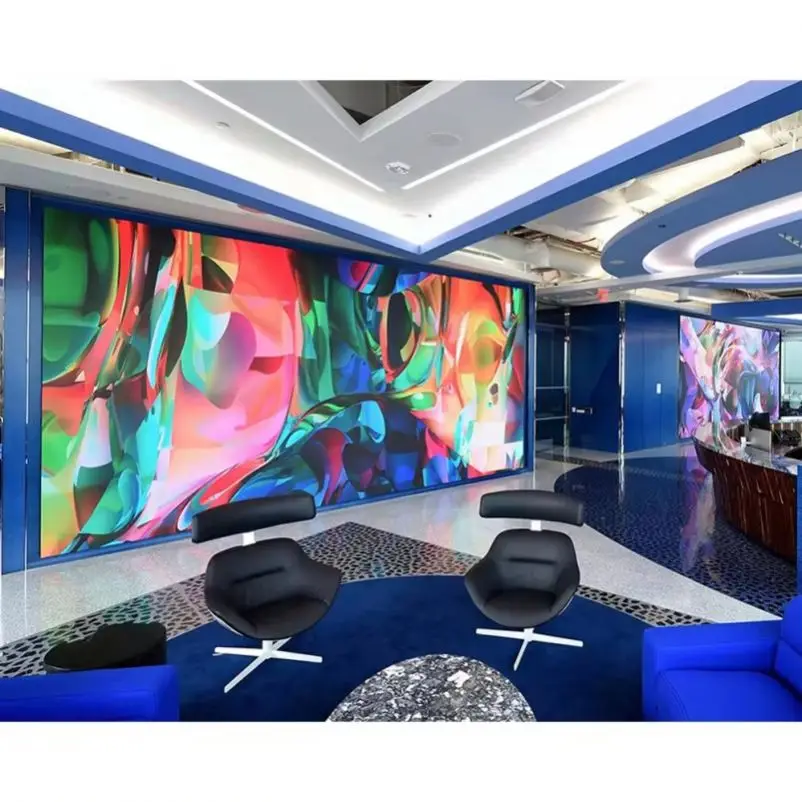
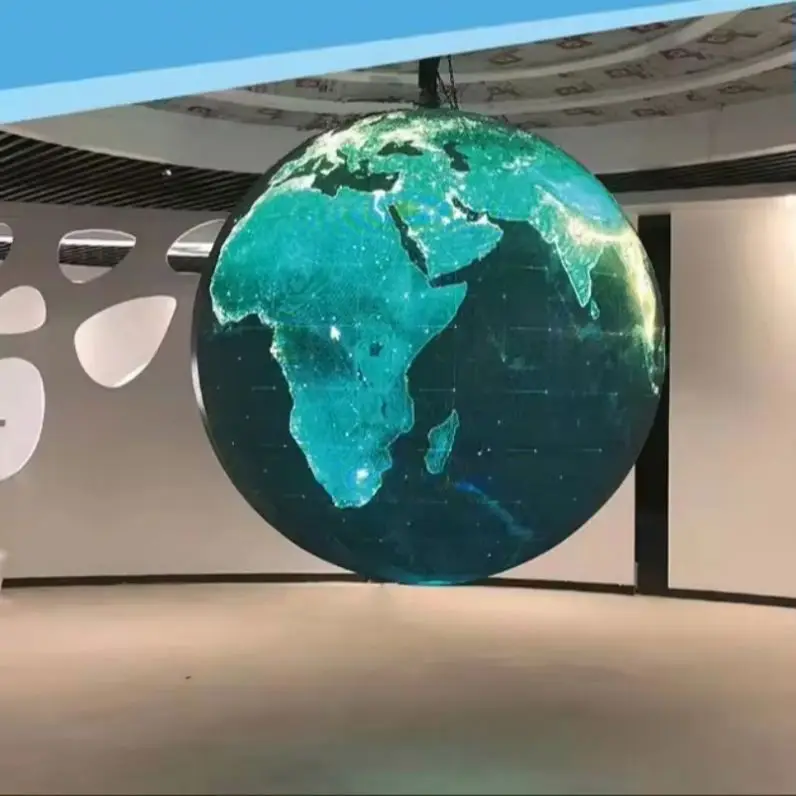
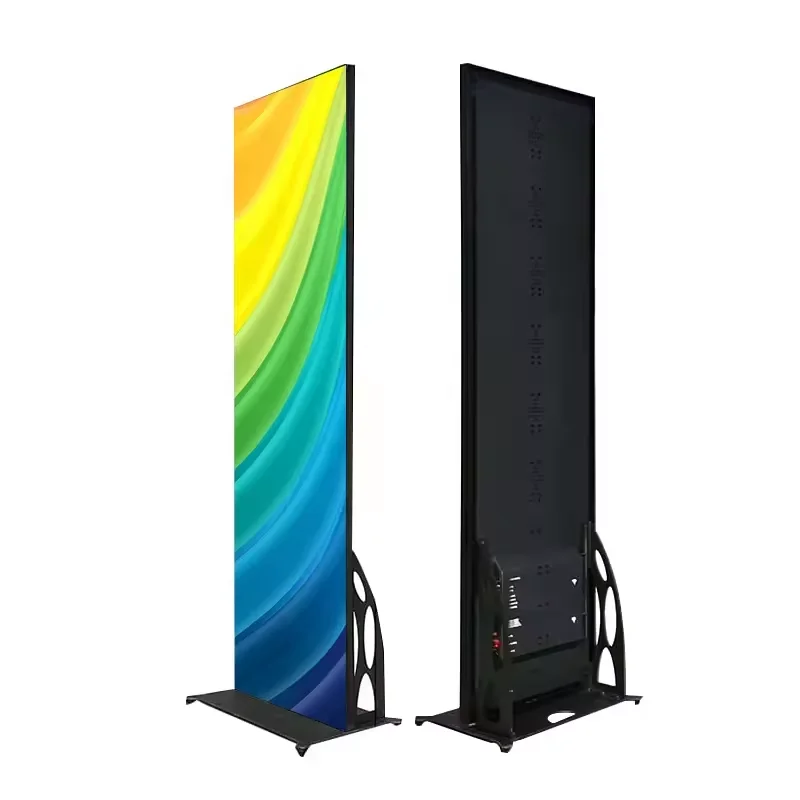
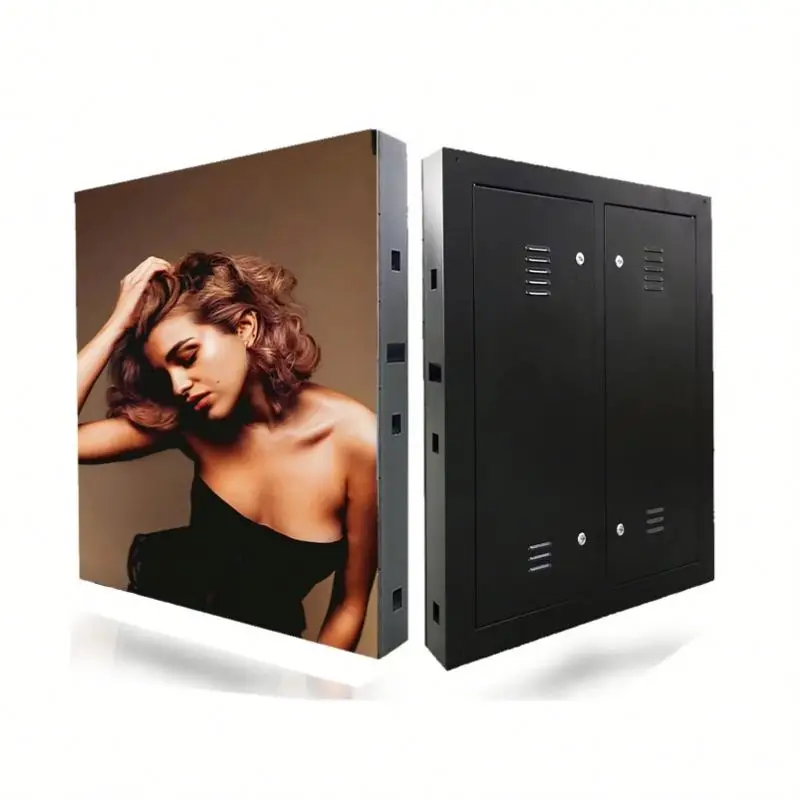
Modern control centers demand seamless visual integration—bezel-less MicroLED arrays eliminate visible borders between panels, enabling uninterrupted visualization of critical data streams. High-resolution LCD modules offer a cost-efficient alternative without compromising clarity or brightness, delivering 500–1500 nits across diverse lighting conditions. Modular designs support scalable deployment: operators can incrementally expand screen walls as operational needs evolve. Pixel pitch versatility ensures optimal readability—fine-pitch configurations (P0.6–P2.5) suit close-proximity monitoring stations, while larger pitches (P2.5–P10) serve perimeter observation zones. Power management features reduce energy consumption by up to 15% in continuous operation, and individual panel replacement minimizes downtime during failures. Industry-leading systems demonstrate 30% lower maintenance costs versus fixed-display alternatives—proving modularity need not sacrifice reliability.
Mission-critical operations require both flexibility and unwavering continuity. Advanced modular screen walls achieve this through redundant architectures—including dual power supplies, dual signal processors, and hot-swappable components—that prevent single-point failures and enable sub-30-minute panel replacement without system shutdown. Integrated controllers synchronize content across all modules, delivering a unified operational picture despite physical segmentation. Temperature-compensated panels maintain color fidelity across extreme ambient conditions, and proven reliability exceeds 100,000 hours in industrial deployments. Proactive monitoring tools detect anomalies before they impact visualization, triggering real-time alerts and automatic failover protocols. Centralized management software provides full-system oversight—contributing to verified 99.9% uptime in emergency response centers.
| Feature | Operational Benefit | Mission-Critical Impact |
|---|---|---|
| Bezel-free design | Uninterrupted data visualization | Enhanced situational awareness |
| Hot-swappable modules | Sub-30 minute panel replacement | Near-zero downtime maintenance |
| Dual redundant systems | Automatic failover during failures | Continuous operational readiness |
| Adaptive brightness | 500–1500 nits adjustable output | Readability in variable lighting |
Modular screen walls are no longer passive displays—they serve as the foundational layer of an integrated video wall architecture that transforms control centers into unified operational hubs. By synchronizing display hardware with KVM switches, user workstations, and centralized control software, these systems unify data aggregation, routing, and visualization into a single, responsive workflow.
Effective integration hinges on tight orchestration between screen walls and core control infrastructure. KVM switches and centralized software enable instant access to heterogeneous inputs—security feeds, SCADA dashboards, GIS maps—via intuitive drag-and-drop routing. This eliminates manual switching delays and supports rapid scene reconfiguration during incidents. Hardware redundancy (e.g., duplicated processors and network paths) underpins 24/7 reliability, while ergonomic interface design reduces cognitive load and operator fatigue. Field data from emergency response centers shows such synchronization cuts average incident response times by up to 30%, reinforcing how seamless integration directly strengthens operational resilience.
Real-time visualization consolidates live data from multiple mission-critical sources—CCTV, SCADA, GIS, and IoT sensors—onto a single, context-rich canvas. High-resolution rendering preserves fidelity of geospatial overlays, sensor telemetry, and facial details in surveillance footage. Overlaying CCTV streams with SCADA metrics, for example, allows operators to correlate physical events (e.g., a security breach) with system impacts (e.g., door lock status or alarm triggers), accelerating root-cause analysis. IoT-derived predictive alerts—such as equipment temperature spikes or vibration anomalies—add foresight to reactive monitoring. Optimized AV-over-IP networks ensure end-to-end latency remains within milliseconds, delivering actionable intelligence precisely when it matters most.
Sustained operational integrity depends on purpose-built processors and control systems engineered for continuous duty. AV-over-IP infrastructure forms the backbone—distributing video, audio, and metadata over standard Ethernet networks to enable scalable, flexible, and future-proof deployments. Hardware redundancy is non-negotiable: dual power supplies, mirrored processors, and automatic failover mechanisms preserve functionality during component failure—supporting documented uptime exceeding 99.99% in utilities and national security facilities. Intuitive, role-based control interfaces—such as drag-and-drop layout editors from leading vendors—empower operators to reassign sources or adjust scenes in seconds, not minutes. This combination of robust infrastructure and human-centered design reduces mean time to repair (MTTR), lowers long-term TCO, and sustains decision velocity across shifts.
Technology only delivers value when aligned with human performance. Control room ergonomics directly influence alertness, accuracy, and endurance—especially during extended or high-stakes operations. Adjustable workstations accommodate diverse anthropometrics; ambient lighting is calibrated to minimize glare and screen reflection; and primary data zones are positioned at eye level to reduce neck strain and visual saccades. Strategic placement of modular screen walls ensures operators maintain natural sightlines without excessive head or body movement. Adherence to ISO 11064 standards for control center design correlates with a documented 30% reduction in operator errors (Pyrotech, 2025). Complementary features—including sit-stand desks, acoustic dampening, and task-specific lighting—further sustain cognitive engagement. When modular displays, intuitive controls, and human physiology operate in concert, control rooms evolve from monitoring stations into proactive command environments where safety, speed, and precision converge.
What are bezel-less MicroLED arrays?
Bezel-less MicroLED arrays are display setups where the panels have no visible borders, allowing for seamless integration and uninterrupted visualization between screens.
How do modular screen walls ensure reliability?
Modular screen walls are designed with redundant architectures including dual power supplies and hot-swappable components which prevent single-point failures and ensure continuity of operations.
What is AV-over-IP infrastructure and its significance?
AV-over-IP infrastructure distributes audio, video, and metadata over standard networks, enabling scalable and flexible deployments necessary for continuous operational integrity.
 Hot News
2025-05-27
2025-09-25
2025-09-23
 EN
EN